
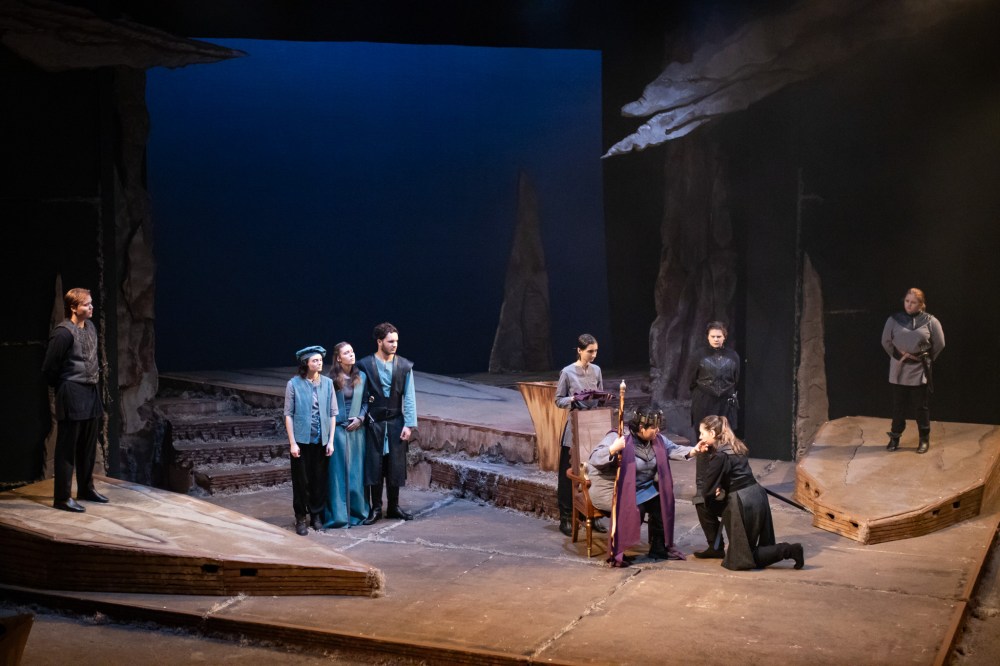
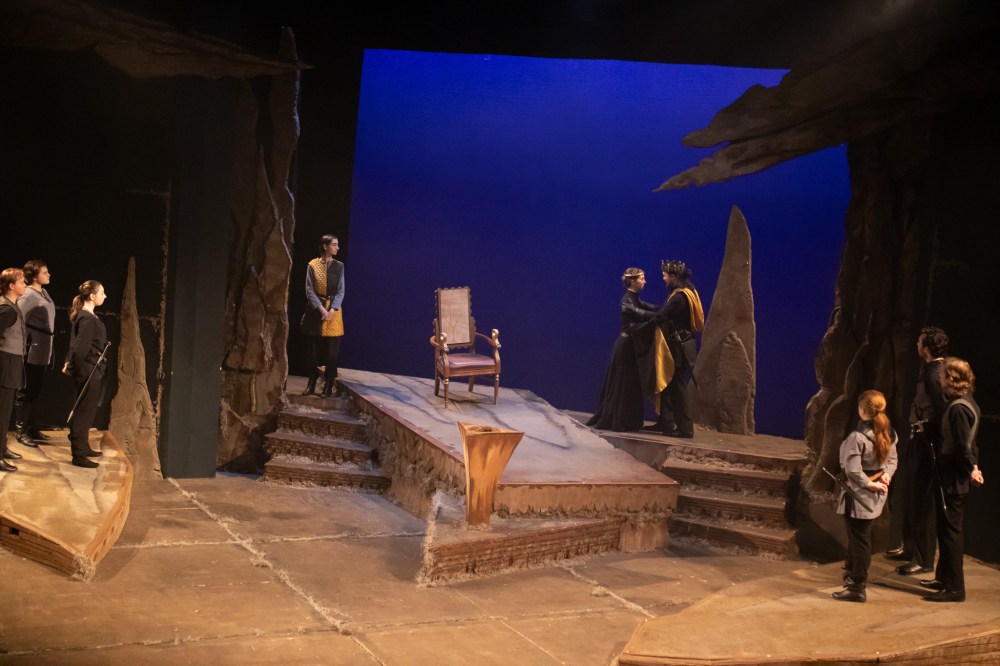
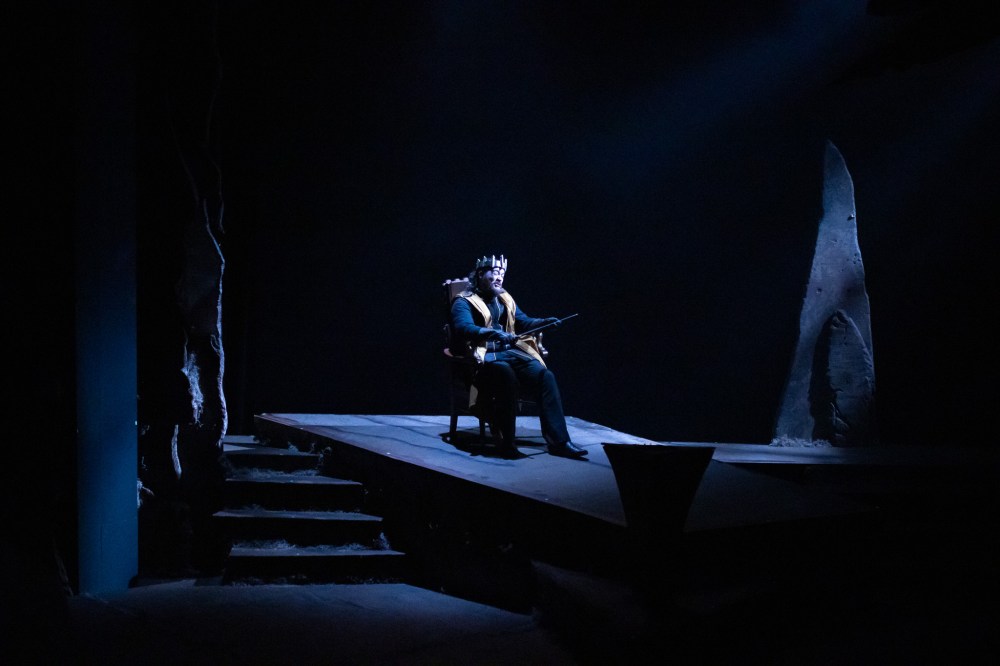
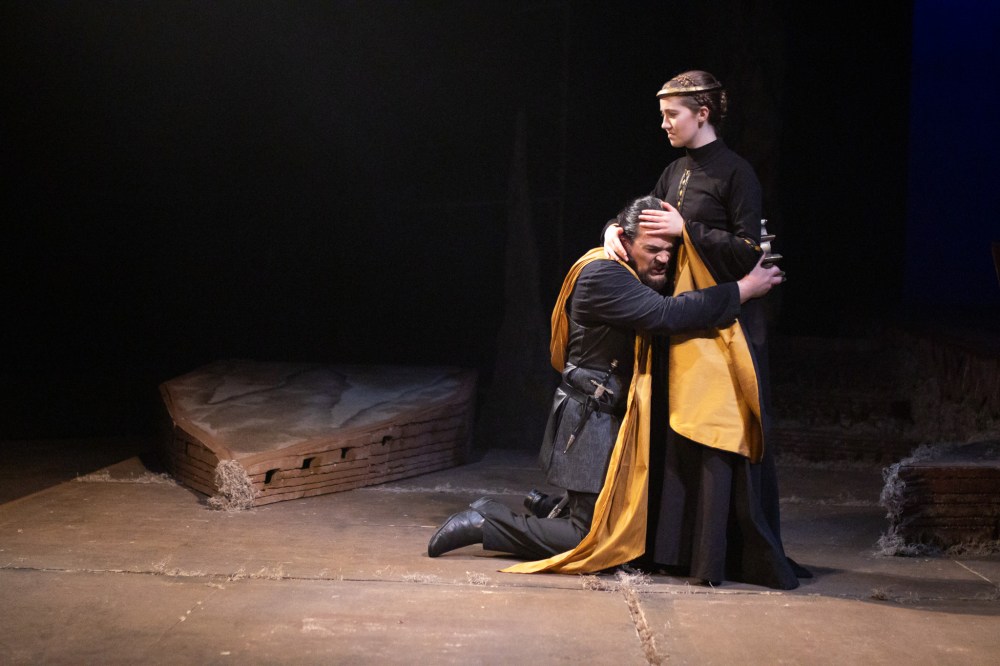
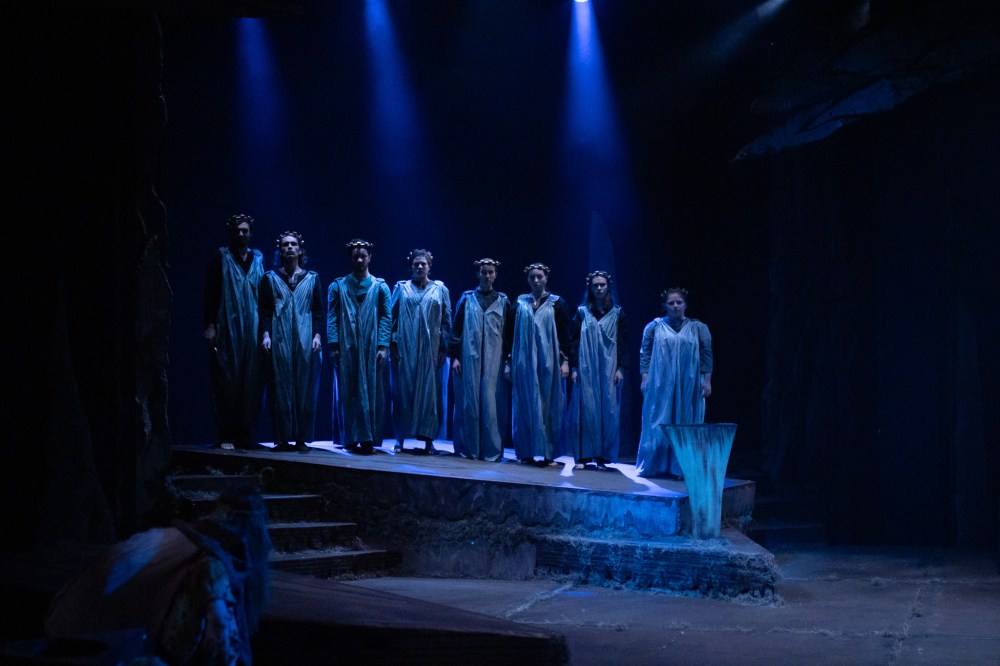
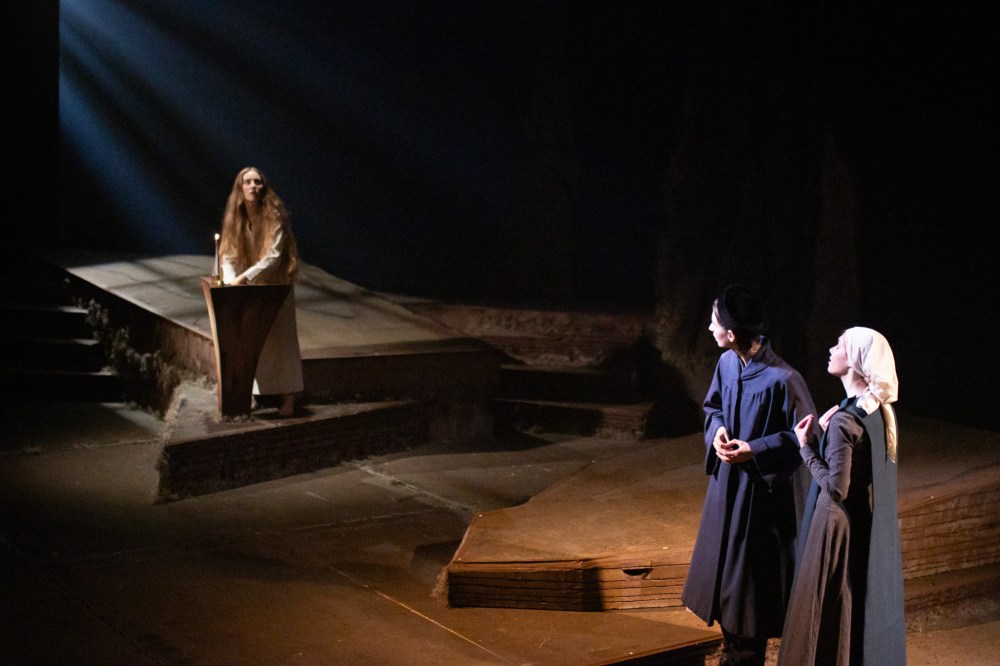
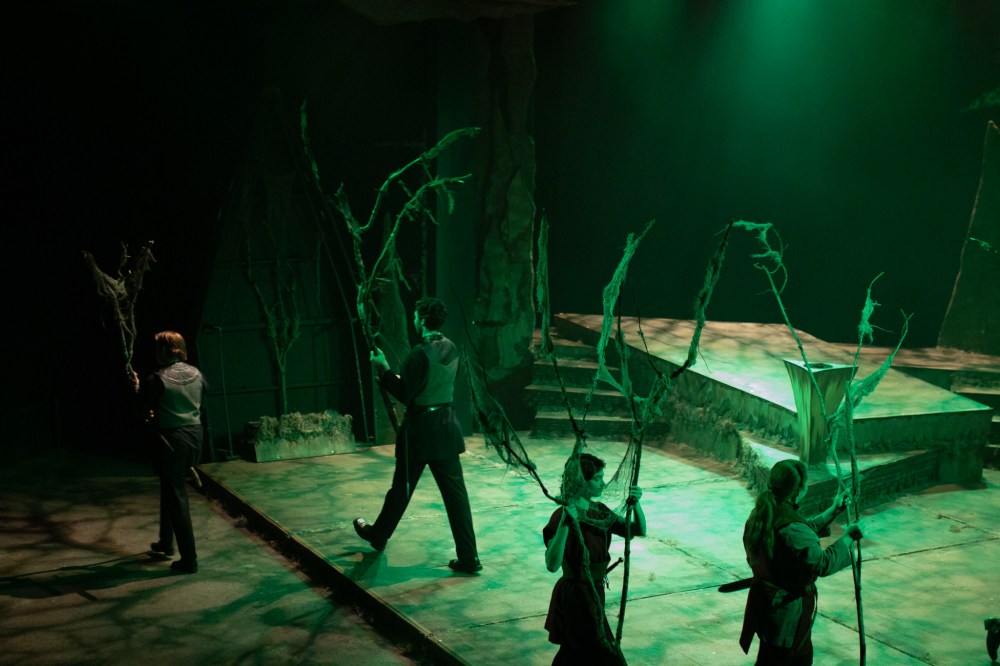
Macbeth at Linfield University, 2025. All photos by Mariah Anderson
Director’s Note
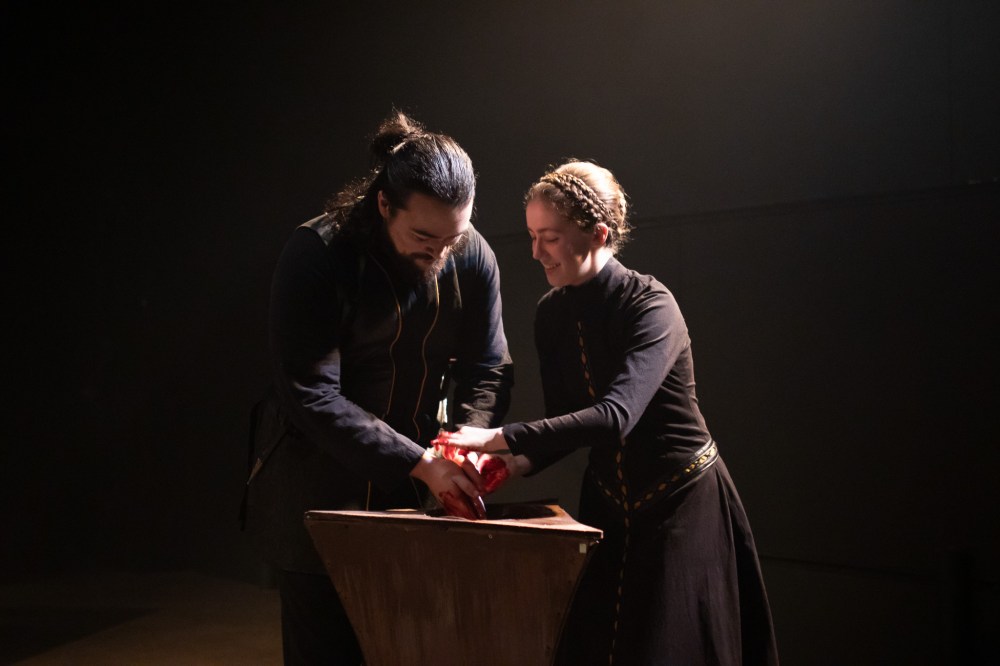
Shakespeare’s shortest tragedy, Macbeth doesn’t bother with subplots or comic relief characters. Instead, it zeroes in on its tragic heroes, the Macbeths. Strong textual evidence suggests this couple suffered an excruciating loss of a child, and the devastation left them deeply bonded to each other. Even before they appear together on stage, the Macbeths read each other’s dark minds and plot violent deeds together.
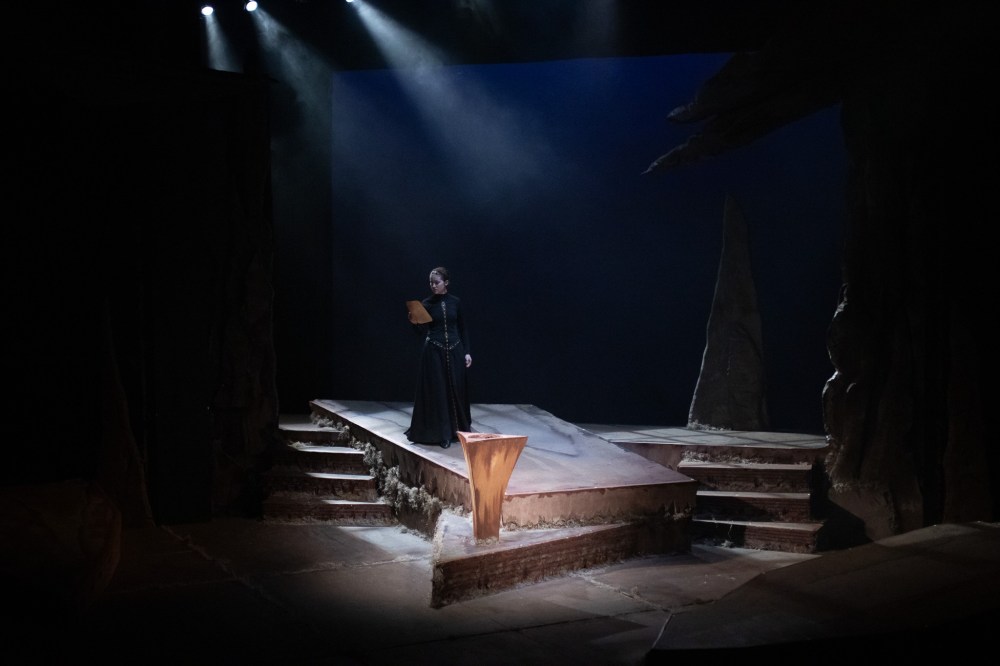
Upon hearing the prophecy that Macbeth will be king, they both speak of wanting greatness for the other (remarkable given the gender politics of eleventh century Scotland). This throne will become their new child, which will give them meaning in the face of their terrible loss. Yet, once they’ve executed the bloody deed that puts Macbeth on the throne, their bond is riven and, lost in their despair and paranoia, they cannot find their way back together. Despite gaining status and earthly power, they have lost each other, which means they have lost everything.
What choice did they have, in the face of prophecy?

The play asks deeply uncomfortable questions about the inherent violence of people. It starts with war and ends with war. During the two–hundred–year stretch of Scottish history that includes the ruler Macbeth, only two kings died peacefully in bed. The play ends with Malcolm crowned king after Macbeth’s death, but historically, first it will be Lulach, the son Lady Macbeth brought to her marriage to Macbeth. Although Malcolm’s ascension to the throne might seem in the play to be a reprieve from bloodshed, in actuality he killed Lulach to become king, while his brother Donalbain waited in the wings — he would later invade Scotland with an army to take the throne. Tomorrow, and tomorrow, and tomorrow, more violence. How can we escape these cycles of violence?
Enter the “weird sisters.”
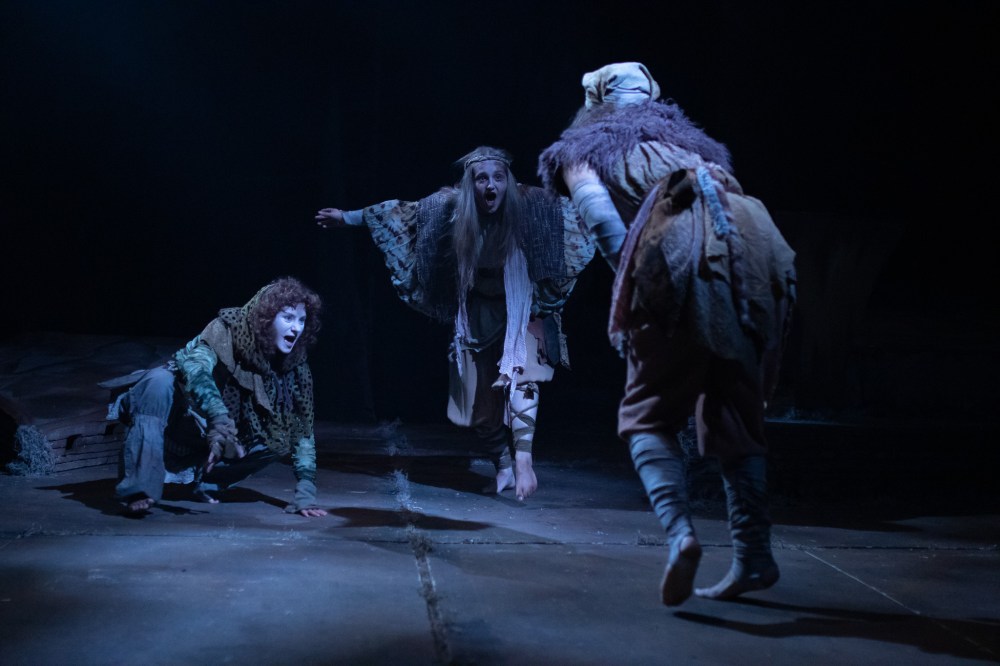
The word “witch” likely entered the script after Shakespeare’s death, when future editors interpolated new material into some of his plays. The three mystical figures were likely originally closer to Norns, Fae, or Fates–faeries or demigods with unearthly powers. Maybe the human drive toward brutality is instigated by these other–worldly powers. It would certainly be easy to displace responsibility onto them.
What if instead these faeries represent vengeful earth spirits tired of ruinous humans cutting swaths of destruction through beautiful forests, biodiverse moors, and florid meadows as they greedily grab more and more power? What if their solution to climate change is simply to nudge people in the violent directions they were predisposed to go, cleansing the earth through human self–destruction?
Can we resist these dark faeries? What steps can we take so that human existence on this planet is more than just “a tale of sound and fury, signifying nothing”?
– Lindsey Mantoan, Director





 Lindsey Mantoan, Ph.D.